Farmer’s Footprint – connecting healthy soil, healthy communities & healthy farmers
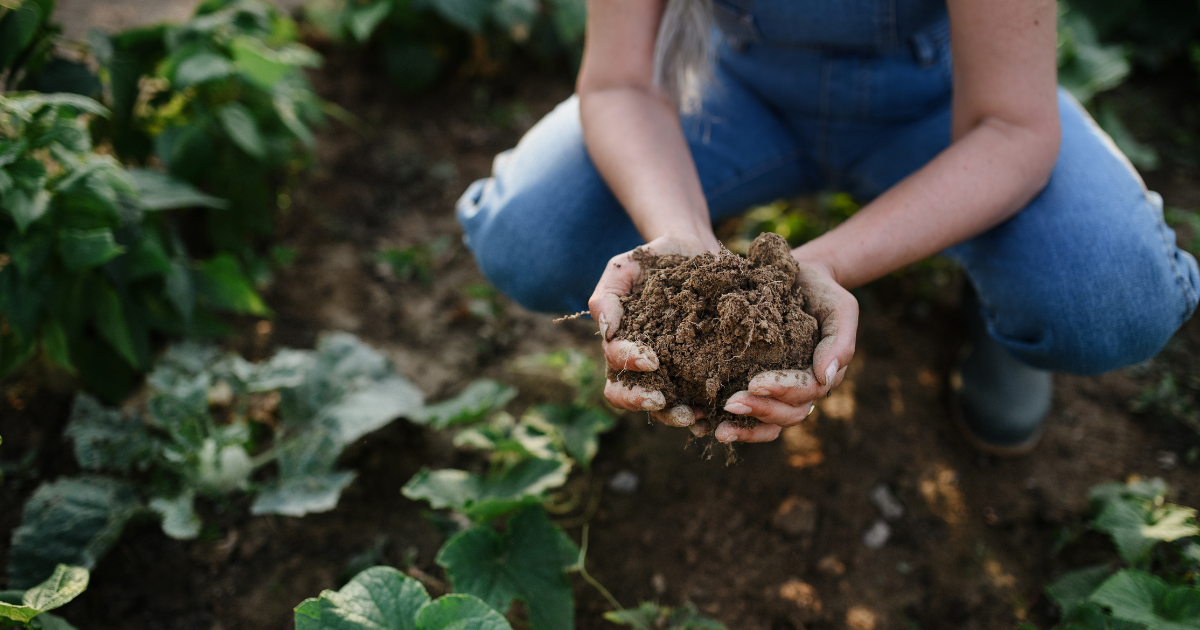
Farmer’s Footprint Australia is helping reconnect people with the systems behind their food, using storytelling, education and farmer wellbeing initiatives to strengthen healthier soils, healthier communities and more resilient farming futures.
.png)
.png)
Australians are becoming more and more concerned about how their food is grown – and these concerns are showing up in recent research around land use, regional communities and the producers that are operating in the system.
In Australia, agriculture is now responsible for a bit over 18% of Australia’s total greenhouse gas emissions, and around half of national methane emissions, largely from livestock and fertiliser use. Decades of land clearing and intensive farming practices have also contributed to widespread soil degradation and dryland salinity in agricultural areas, including the Northern Rivers. Government and expert analyses warn that these trends directly threaten the long-term productivity of farming land. Economically, the official snapshot of Australian agriculture shows a long-term decline in the number of farms and rising exposure to climate volatility like droughts and extreme heat.
Australians know that things need to change. A national survey indicates that around 45% of Australians now grow at least some of their own food, motivated by concerns about the health of their families, the cost of living and the ongoing environmental impacts.
For the team at Farmer’s Footprint Australia, this isn’t news. It’s a conversation they’ve been having for years. And it began with one simple but urgent question – what is the true cost of the way we’re growing our food, and what can we do about it?
From a film to a movement
This question led first to a documentary film project exploring the hidden impacts of modern food systems, including the connections between farming practices, soil health, human health and the pressures facing farmers. Through film, Farmer’s Footprint began helping people reconnect with the systems behind their food and the people working within them.
The project soon evolved into a growing movement focused on the connection between agriculture, human health, ecological restoration and farmer wellbeing. At the centre of this movement is the firm belief that the health of the farmers and the communities they serve is inseparable from the health of the systems they steward.
Blair Beattie, Director of Farmer’s Footprint Australia, says very clearly that ‘Farmer’s Footprint is not a farm – ‘it is a bridge’.
He says, Farmer’s Footprint ‘connects agriculture, human health, and ecological restoration, while placing farmer wellbeing at the centre of that conversation. What makes this work unique is its focus on root cause – recognising that declining soil health, increasing chemical dependency and rising pressure on farmers are not separate issues, but part of the same system.’
At Farmer’s Footprint the goal is to make the relationships between soil health, food quality, farmer wellbeing and community resilience, visible to Australians who are impacted by it daily.’
Making connections visible
For Farmer’s Footprint it’s vital to give voice to Australia’s regenerative food story. They tackle this challenge in three main ways:
- Raising awareness by sharing farmer’s stories and highlighting how they’re using regenerative practices to transform the land, the farmers and planetary health
- Providing education by connecting farmers to educators, resources and information about regenerative farming practices and their benefits
- Creating support, empowering and connecting farmers, stakeholders and consumers with positive actions that can help regenerate our food system
For many consumers the only experience they have with food is at the endpoint of the system – the supermarket shelves. Through no fault of their own, they’re disconnected from the land, the growing conditions and the people behind it.
But as Blair says, ‘Food is not just a product – it’s a relationship… between people, soil, water, climate, community, culture and the unseen living systems that sustain life.
Rebuilding that connection matters because when people reconnect to where food comes from, they begin to understand that the health of humans, farmers and ecosystems are inseparable. Healthy food cannot come from depleted soil, broken communities or chronically stressed farming families. The wellbeing of the land and the wellbeing of people are deeply linked.’
Why our farmers matter
Visibility builds understanding. As Blair says, ‘the way we grow food shapes the health of our soil, our ecosystems, our communities and the farmers themselves.’ But it’s that final element that is precisely what’s often missing from these conversations – the wellbeing of the farmers themselves.
‘The wellbeing of farmers is one of the most overlooked – and most critical – aspects of our food system. Farmers carry immense responsibility, yet often operate under financial pressure, environmental stress and increasing isolation.’ He continues, ‘Many farmers feel increasingly isolated – economically squeezed, chemically dependent, emotionally exhausted and often carrying the burden of feeding a society that rarely sees their reality, or even seems to care!’
Farming groups have argued that, in some cases, Australian farmers receive only a small share of the retail food dollar, despite rising input costs, environmental pressures and increasing public expectations around sustainability and food quality. And that share is shrinking.
Australian farm profits have been cut by an average of 20-23% since 2000, with some regions seeing those decline by over 50% due to their hotter, drier conditions. And a 2024 Roy Morgan survey found that 70% of farmers say their business is financially worse off than a year ago. And 88% of Australian farmers had their farming operation significantly affected by natural disasters over the previous five years, at an average cost of about $1.4 million per farm.
These pressures cause incredible pressures and negative outcomes for farmers. Nearly half of Australian farmers have felt depressed in recent years, and almost two-thirds have experienced anxiety. Additionally, around 27% cite loneliness, isolation and limited access to mental health services as having the biggest impact on their mental health.
And as Blair has seen firsthand, these pressures can’t be separated from the broader conversations about soil health, food quality and regeneration. Healthy farms depend on healthy farmers, and supporting farmer wellbeing is essential to building resilient agricultural systems for the future.
.png)
Regeneration beyond the soil
For Farmer’s Footprint, regeneration extends beyond just agricultural practices. It includes a focus on restoring the systems as a whole – the soil, the water, the food quality, and human health – while also rebuilding the connection between people, place and community.
This broader understanding of regeneration recognises that the way our food is grown impacts:
- The nutrient density of food
- The integrity of ecosystems
- The resilience of farming communities
- And the long-term health of the people consuming it.
That interconnectedness sits at the heart of Farmer’s Footprint’s work.
Blair says, ‘Farmer’s Footprint is in a phase of expansion – moving from awareness into deeper support and implementation… with a growing focus on farmer health and wellbeing initiatives – including retreats, education platforms, and community hubs that support farmers in practical, physical, and mental ways.
This work recognises that transition is not just technical – it is personal.
As farming systems shift toward regeneration, farmers themselves are being asked to navigate change, uncertainty, and new ways of operating. Supporting them through that process is essential.
Farmer’s Footprint is helping to build the structures, networks, and resources that make this transition possible – for both land and people.’
For Farmer’s Footprint, this work is grounded in a belief that regeneration is not something that happens in isolation, but something that grows through relationships, collaboration and communities willing to support one another through change.
And as Blair says, ‘Long term, I believe this reconnection is essential if agriculture is to evolve beyond short-term extraction toward genuine regeneration. Because the future of farming isn’t just about yield or technology – it’s about restoring relationship: between people and nature; between consumers; and farmers and between humanity and the living systems we depend upon..’
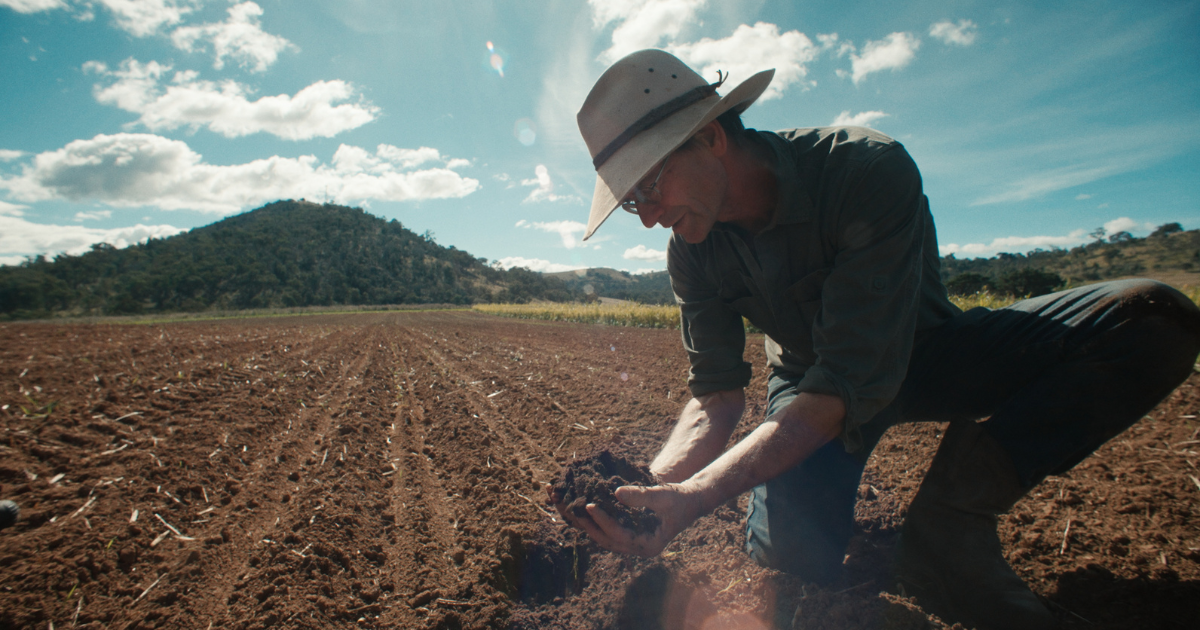
There is hope on the horizon
Through initiatives like Farmer’s Footprint and Vitality Farms, those on the ground, such as Blair believe ‘there is a quiet awakening happening.’
Blair says, ‘I see hope in farmers rebuilding soil biology, bringing diversity back into landscapes, reducing chemical dependency, restoring water cycles and producing deeply nutrient-dense food. I see hope in younger generations wanting meaning and connection, not just profit. I see hope in consumers beginning to care about provenance, integrity, and the story behind their food.’
Download our Prospectus
Enter your details below to download our latest Vitality Farms Northern Rivers Prospectus 2026.
Please try again.
.png)
Vitality Farms Northern Rivers exists to help the region lead with greater visibility, stronger connection and a more trusted shared identity.
Join the movement — Connect with us today.
Download the Prospectus
Fill out your details below and we will send you our latest prospectus!
Please try again.